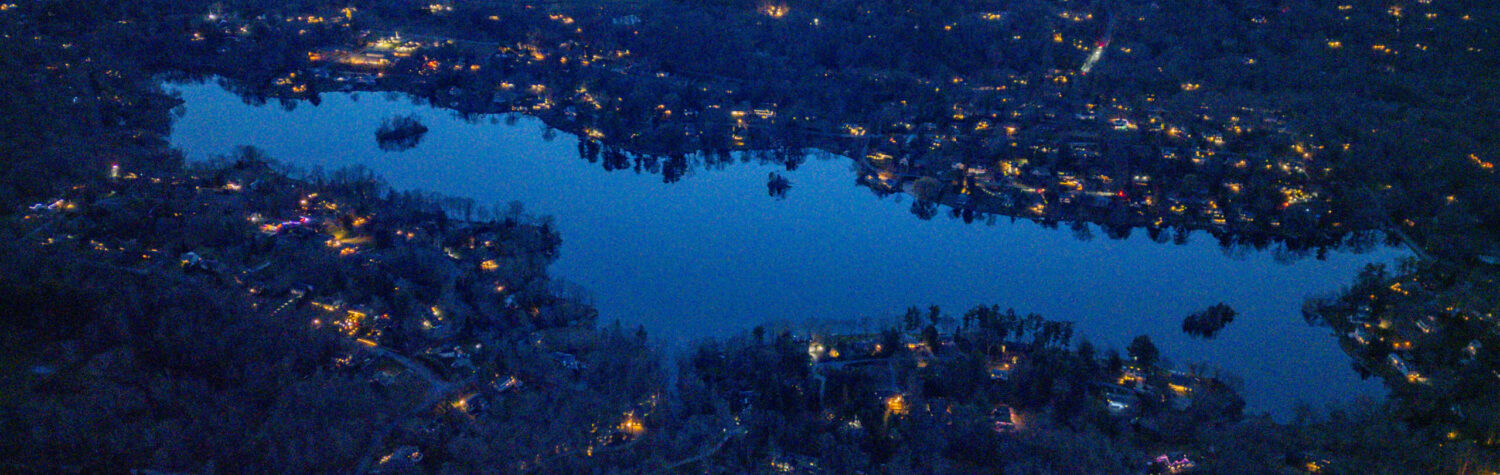
You may have noticed the rapid growth and spread of phragmites both around town and especially around our lake shoreline. Phragmites is an invasive plant with no upside benefits.
There is more information in this post about why we are taking steps to control this invasive plant.
On October 4th, 2023, Pond & Lake Connection will treat the phragmites around the lake with Clearcast, an aquatic herbicide. It’s appropriate to treat at this time of year when plants are beginning to store resources in order to maximize the herbicide effectiveness.
Once treated, the plants will start to die. Further action must be taken locally to eradicate the infestations at the shorelines. If this is not done, the phragmites will return and continue to spread. They are tenacious and have extensive root/rhizomes under the water with stored energy sources to repopulate once spring comes around.
We are going to lower the lake again this winter and that will make it easier, if you choose, to cut and remove the dead plants.
Freshwater lakes are vital ecosystems that support a rich diversity of plant and animal life. However, the delicate balance of these ecosystems can be disrupted by invasive species like Phragmites australis, commonly known as common reed. While Phragmites may appear as a picturesque addition to lake shorelines, their unchecked growth can have detrimental effects on the environment, and water quality. This article delves into the reasons why the removal of Phragmites from freshwater lake shorelines is an essential step towards restoring and preserving these critical ecosystems.
Invasive Nature of Phragmites Phragmites australis is a highly invasive perennial grass that originated in Eurasia but has rapidly spread. Its aggressive growth habit and ability to outcompete native vegetation make it a formidable threat to the ecological balance of freshwater lake shorelines. Phragmites forms dense monocultures that shade out native plants, reducing habitat diversity and disrupting the natural habitat of aquatic organisms.
Impact on Biodiversity The unchecked expansion of Phragmites can lead to a decline in native plant and animal species. Many native plants provide essential food and habitat for insects, birds, a displacement by Phragmites can result in a cascading effect throughout the ecosystem.
Altered Hydrology Phragmites stands can alter the hydrology of freshwater lake ecosystems. The dense growth of these plants can impede the natural flow of water along shorelines, leading to the formation of stagnant water pools and increasing the risk of flooding during heavy rainfall events. This alteration in water flow can also impact sediment deposition and nutrient cycling, further disrupting the ecological balance of the lake.
Degraded Water Quality The negative impacts of Phragmites extend to water quality. The dense root systems of these plants stabilize sediment, leading to the accumulation of organic matter and nutrients in the water. This can result in decreased water clarity, increased turbidity, and heightened levels of nutrients like phosphorus and nitrogen, which can fuel the growth of harmful algal blooms. Such blooms can produce toxins that threaten the health of aquatic life and render water supplies unsafe for human use.
Restoration Efforts Recognizing the importance of preserving freshwater lake ecosystems, many communities have initiated efforts to remove Phragmites and restore native vegetation. These restoration projects often involve manual, mechanical, or chemical methods to control Phragmites growth, followed by the planting of native species to restore ecological balance. While these efforts can be challenging and require ongoing maintenance, successful restoration can lead to improved biodiversity, water quality, and recreational opportunities.
Conclusion
The removal of Phragmites from freshwater lake shorelines is not just a matter of aesthetics; it’s a crucial step in protecting and restoring these vital ecosystems. The invasive nature of Phragmites disrupts native habitats, impacts biodiversity, alters hydrology, degrades water quality, and causes recreational challenges.
August 1, 2023
by rob Comments Off on Third Time’s a Charm? Moonlight Regatta August 26… A Blue Moon!
On Monday, July 24th, our lake management company, Pond and Lake Connection, will be treating our lake with Cutrine (algae treatment). There is no swimming restriction. If you irrigate your lawn using lake water, we suggest waiting 24 hrs after treatment.
Pond & Lake Connection fanboat on Lake Truesdale.
July 19, 2023
by rob Comments Off on CLEANING UP OUR LAKES: Septics & Sewers
In 2021, the Town of Lewisboro received a grant from the New York City Department of Environmental Protection (NYC DEP) to perform engineering studies on three of our lakes—Waccabuc, Truesdale and Kitchawan—to assess the impacts of septic systems and identify potential solutions. The studies confirmed what decades of lake sampling data and previous research had long suggested: septic pollution is the primary contributor to the lakes’ phosphorus load, and phosphorus is the primary agent accelerating our lakes’ eutrophication (the process by which lakes age and die).
Image: one of twelve pages of detail from the linked and downloadable PDF viewable below.
These three studies conducted by independent firms (Barton & Loguidice-Waccabuc, Ramboll Engineering-Truesdale, Woodard & Curran-Kitchawan) went beyond diagnosis to research and recommend the most feasible and effective wastewater treatment solutions—a sewer system for the four lakes in the center of Lewisboro and enhanced septic treatment units for Lake Kitchawan further south.
Following the release of the three individual reports lake residents from all seven of the town’s lakes rallied together and formed the Lewisboro Lakes Coalition (LLC) to enlist the support of town, county and state elected officials in applying for funding to implement these proposed wastewater solutions. Lewisboro’s lakes are eligible for funding as part of the Croton watershed, one of three reservoir systems providing drinking water to the 10 million residents of New York City.
At the moment, New York City’s Department of Environmental Protection is particularly interested in cleaning up the Croton system’s water BEFORE it reaches down-county filtration and treatment facilities, so it is an opportune moment to act.
The offices of Chris Burdick (NY Assembly) and Pete Harckham (NY Senate) were instrumental, working with Sue Enos of the LLC and Jan Andersen of the Three Lakes Council (TLC), in securing a $3mm East of Hudson Watershed Corporation grant to engage the engineering firm of Woodard & Curran to lay out the recommended sewer and septic districts. Other key contributors to the unprecedented progress so far are: Tony Gonçalves, Lewisboro Town Supervisor, Erika Pierce, Westchester County Legislator, Millie Magraw, Westchester County Planning Dept Coordinator, and Tom Snow, NYC Watershed Coordinator, NYS DEC.
On June 8, 2023, Woodard & Curran issued their report:
A low-pressure sewer collection system and central wastewater treatment plant located at the Main Street town campus is proposed for densely populated communities around Truesdale Lake and the Three Lakes (Waccabuc, Oscaleta, and Rippowam) at an estimated cost of $40 million. The Town is currently applying for grants from New York State to cover these capital costs.
Since Lake Kitchawan is a substantial distance from these other four eastern lakes, connecting residences around this lake to a central sewage treatment plant would be prohibitively expensive.
The best solution for mitigating pollution in this lake is replace inadequate septic systems with “enhanced treatment systems” at a cost of $6.25 million. As this is a far less complex undertaking and funding is already allocated (if not awarded), it is likely that Kitchawan may be designated as the first phase in remediating septic pollution in our lakes.
The Town of Lewisboro continues to study alternatives for mitigating septic pollution in the remaining Lewisboro lakes — Lake Katonah and Timber Lake (The Colony) — which are in the Croton River basin to the west. In that effort, it has engaged Westchester County and NY State officials, as well as the NYC DEP. To determine the best solution for each of the lakes and explore funding opportunities, further research will need to be conducted.
The Lewisboro Lakes Coalition, representing all seven lakes, has formed a Community Outreach group to update residents on continued progress. Information will be available through individual lake associations, on lake association websites, and in other publications. The Community Outreach group will work closely with Tony Gonçalves, Lewisboro Town Supervisor, to keep everyone informed.
Here is the latest memo in PDF format. View or download it:
The July 3 full moon was not really visible this summer.
The July full moon is typically known as “The Buck Moon” is also known as “The Thunder Moon.” It certainly lived up to that name this summer, as an alternately cloudy, rainy, and sunny humid day ended with a bang between 7-9pm with a pretty typical July thunderstorm. Plans for the July 3 Moonlight regatta sadly had to be shelved.
The good news is there are TWO MORE full moons this summer.
Summer Full Moon #2 of 3
The next one, August 1st (known as “The Sturgeon Moon,” “The Grain Moon,” or “The Red Moon”), happens on a Tuesday night. That’s not so great for the evening plans of many people. But the moon will be 7/8ths full on the Saturday night before then — July 29th!
Again — Weather Permitting — let’s meet for a second try at the 2023 moonlight regatta in the middle of the lake the evening of Saturday July 29th.
We mentioned there is another full moon this summer – and the third one is a special one.
Happening on August 30th, it will be the second full moon in the month of August. Since the Sturgeon Moon name is taken, there is a term for the second full moon of any month: The Blue Moon. (as in “Once in a Blue Moon”). Blue moons happen once every 2 1/2 – 3 years. And Summer Blue Moons are even more rare.
Since August 30th is a Wednesday (and a rather inconvenient time for an evening regatta) we can have a third try at the 2023 Truesdale “7/8ths blue moon regatta” on the Saturday evening before then – August 26th. The moon will be high in the sky – and hopefully visible with no clouds – by the time darkness falls.
More information
More details will be forthcoming – typically the August moonlight regattas get an earlier start than the June or July ones because the sun sets earlier.
Be ready to set sail at 8pm for the July 29th regatta.
Get yourself and your boat(s) ready for the first Truesdale Lake moonlight regatta of 2023. Date is July 3rd (the Buck Moon). Bring the kids. Bring the lights! Bring the cheer! https://truesdalelake.com/moonlight/
Sunset is at 8:30pm on Monday July 3rd. Civil twilight begins at 9:03pm. We recommend heading out on the lake between these times. Moonrise is 9:22pm and the moon will rise over trees on the east side of the lake 15-20 minutes after then — lighting up the water.
Prep your watercraft beforehand with lights and provisions.
BYO Truesdale Lake registered boat with a Truesdale Lake Sticker — or make arrangements ahead with someone who has one!
Remember to bring light source(s) to help navigate home.
Lighting decoration on boats encouraged – not too bright! Glow sticks, LEDs, lanterns, etc. if you have a dock, navigation lights are appreciated!
#moonlightregatta #truesdalelake #laketruesdale
May 16, 2023
by rob Comments Off on Lake Treatment May 19, 2023
Pond and Lake Connection will be doing their first treatment on the lake Friday, May 19th. As in the past, there is no recreational restriction.
There is, however, a 24 hr irrigation restriction since this application is an herbicide treatment. If you draw water from the lake to irrigate your lawn or garden, turn it off during Friday-Saturday.
Please feel free to reach out if you have any questions.