Allied Biological applied Copper Sulfate as an algaecide on June 24, 2013 to slow the seasonal growth of the filamentous algae.
Summary report is attached below (click for larger size).


June 25, 2013
by rob
Comments Off on Treatment Report June 24, 2013
Allied Biological applied Copper Sulfate as an algaecide on June 24, 2013 to slow the seasonal growth of the filamentous algae.
Summary report is attached below (click for larger size).
June 20, 2013
by rob
Comments Off on Annual TEA Kickoff BBQ a Sunny Success
The annual TEA Summer Kickoff Party was a success last saturday with hefty burgers, hot dogs, and dodgeball on tap. Thanks to Debbie for getting us started up, Cathy for organizing the food, and Lisa and Glenn for doing invites and paperwork!


June 18, 2013
by rob
Comments Off on 50 Ways to Love Your Lake

The Town of Lewisboro has a Townwide Lakes Committee with representatives from all seven lakes in Lewisboro. Check their page at the town website here: http://www.lewisborogov.com/Government/committeesandcouncils/lakes.html
They have posted lots of information and studies at the town site. In addition, they also have a great one page flyer titled “50 Ways to Love Your Lake” with ideas and tips about making the most of lake community living.
If that link does not work, we have downloaded it and saved it here:Â http://truesdalelake.com/wp-content/uploads/downloads/2014/09/50_wayslol3lc.pdf
June 17, 2013
by rob
Comments Off on Sunfish Spawning and Fish Deaths
Each spring at the lake edges you will see signs of Sunfish spawning. The sunfish create circular ‘nests’ by fanning away debris and exposing the rocks or sand below. They aggressively defend these nests from others in the water, including humans. If you have ever been wading in the water of Truesdale Lake and been rammed in the legs by a sunfish when you get too close to their nest you will know what I mean. They look small but you will be in for a surprise when they swim into your legs, sometimes repeatedly.
Another spring and early summer sight is dead sunfish along the bank. Based on information from the Connecticut DEEP (Department of Energy and Environmental Protection), we can say that this is a natural part of the sunfish life cycle, affecting the weaker fish during and after spawning.
from the story here:
“The sun fish right now are spawning. When they go into spawning, they are in close proximity to each other,” said Don Mysling, Senior DEEP Fisheries Biologist.
During spawning, the fish don’t eat and become weak. Â They can get small cuts and are susceptible to illness.
“Virus or bacteria can spread quite rapidly from one individual to another,” Mysling said. “So it’s not an unusual occurrence.”
“The sunfish have a virus or bacteria when they spawn,” Parks and Recreation Commission Director Bill DeMaio said. “I’m told that they don’t eat properly and they become less healthy, just like human beings would be if you didn’t eat, and they pass the bacteria to each other.”
Fish deaths can also be caused in a number of other ways. Smaller fish can be chased into shallow water by larger predators and get stuck in weeds and unable to get free. Also, in warmer months, the oxygen levels of the lake go down as the water heats up. This causes the weaker fish to die off.
Truesdale Lake has tens of thousands of fish all different sizes. Our lake manager, Allied Biological, has said that dead fish are nothing to get alarmed about in small quantities (10+ on a typical waterfront) and are normal for lakes. However, if you notice dead fish in larger quantities (over 100) then there may be something else going on and please let us or Allied know so we can have them and the NY State DEC test and investigate.
June 6, 2013
by rob
Comments Off on Boards Out
From Pam Santare: “In anticipation of heavy rain, Ken removed all the boards [from the dam] except the summer board last evening. The lake has been emptying since then. He did not remove the summer board because he would not be able to get it back in after the storm. Also, we did not treat this week since there will be a major flow-through. Since the lake level may rise, you should remove items off docks and at the shoreline.”
May 25, 2013
by rob
Comments Off on Allied Lake Survey Report – May 21, 2013

Allied did a boat survey of plant and algae on the lake Tuesday May 21st. Their report is above. Click the image for a larger copy.
May 6, 2013
by rob
Comments Off on TEA Beach Cleanup May 18th
TEA Members please join in on May 18th starting @ 9am at the TEA Beach on Truesdale Lake Drive for our annual pre-season beach cleanup and beautification!
We will be putting out the swimming dock and ropes, raking new sand out, cleaning storm damage, and clearing other debris from the winter.
Even if you can only come for an hour or so it will help out the overall effort! Many hands make light work. Bring rake, shovel, and any other tools you think will be useful.
Please RSVP to Rosemarie McCarthy 763-0744 or email tea@truesdalelake.com.
Thanks!

Starting on the sand pile.

Go Haleigh!

Success!

Wheelbarrow with power assist 2.
May 6, 2013
by rob
Comments Off on Treatment Report May 6th, 2013
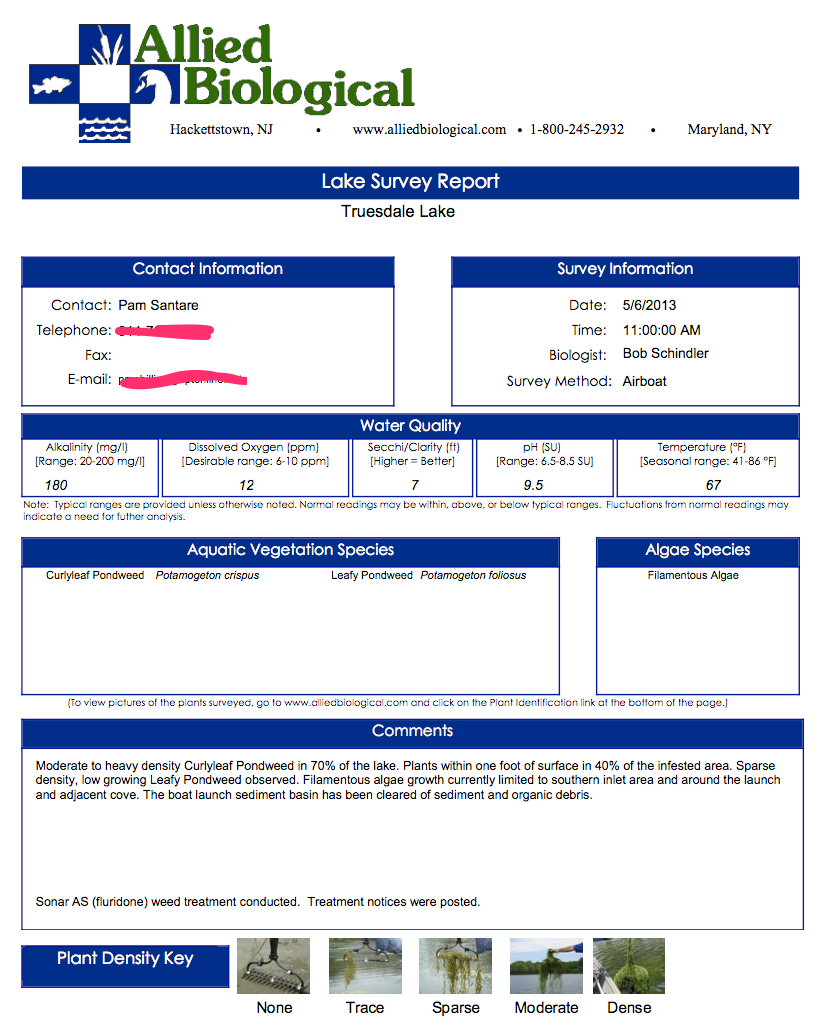
Allied applied Sonar AS as an herbicide today (May 6th, 2013) to slow the growth of the invasive curlyleaf pondweed.
Summary report is attached below (click for larger size).
April 29, 2013
by rob
Comments Off on Allied Lake Survey Report – April 29, 2013
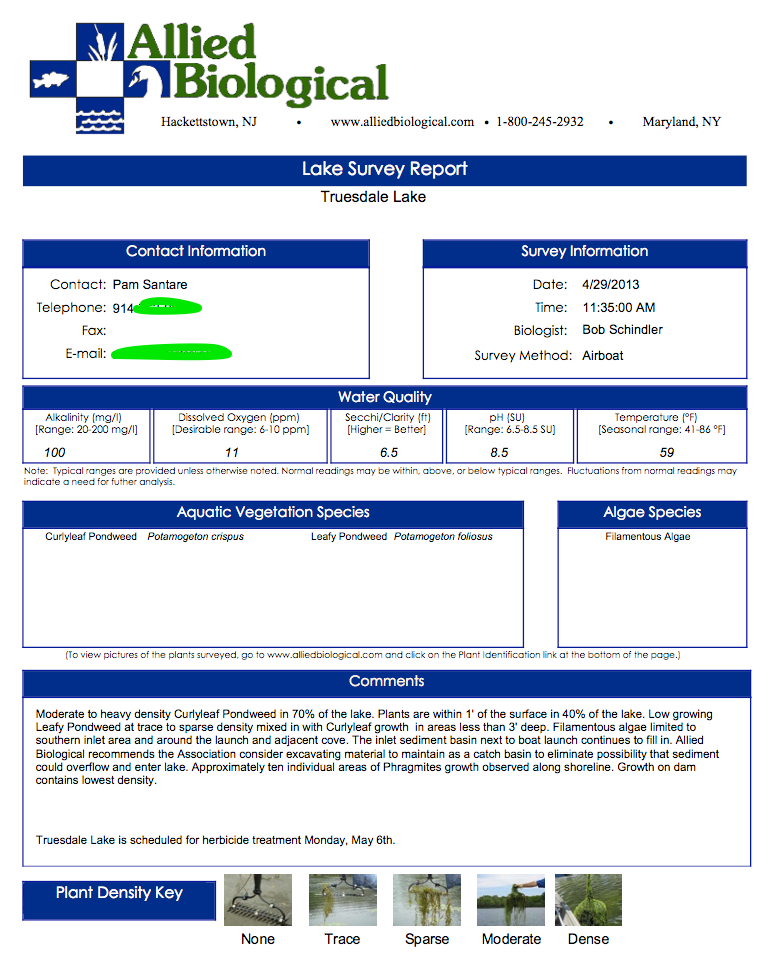
April 29, 2013 Allied Biological Lake Survey Report (click for larger)
Allied did a boat survey of plant and algae on the lake today. Their report is above. Click the image for a larger copy.
April 4, 2013
by rob
Comments Off on Some information about Non-resident Canadian Geese
This is an excerpt from this article on the website. It bears repeating as we enter another springtime at our lovely Lake Truesdale!
Animal waste is one of the many little sources of pollution that can add up to big problems for water quality as well as cause human health problems. Animal waste contains several types of pollutants that contribute to water quality problems: nutrients, pathogens and naturally toxic material, ammonia.
Waste decomposition uses up oxygen. During the summer months when the water is warm, the combination of low oxygen levels and ammonia can kill fish and other aquatic life. The nutrients cause excessive weed growth and algae. Pathogens can make the water unhealthy and unenjoyable. Fortunately, there are some simple practices everyone can do to help prevent pollution by keeping animal waste out of the water.
Some of the more common waste born diseases are: